

What Is Reiki? A Practical Guide to Reiki Healing
Updated: Aug 17
People come to Reiki for all sorts of reasons.
Some are looking for a way to switch off when life feels particularly full. Some are navigating change, feeling anxious, struggling with sleep or moving through grief. Others feel disconnected from themselves, a bit lost, or simply know that something doesn’t feel quite right.
And some aren’t struggling at all. They’ve heard of Reiki, they’re curious about it, and they’d quite like to know what on earth actually happens during a session.
All of these are perfectly good reasons to experience Reiki.
If you’re here because you’re trying to understand what Reiki is, there’s one thing I want you to know from the outset: you don’t need to completely understand how Reiki works in order to experience it. You don’t need to believe anything in particular, and you don’t need to consider yourself remotely spiritual.
Some people come to me with a very clear understanding of energy work and exactly what they’re looking for. Others know very little about Reiki beyond the fact that they’ve heard of it and they’re curious.
I make it my job to meet people wherever they are.
So, if you’ve ever wondered what Reiki actually is, what happens during a treatment and whether it might be for you, let’s take some of the mystery out of it — without taking any of the magic away.
So, what actually is Reiki?
Reiki is a Japanese form of energy healing based on the use of universal life force energy - the energy that flows through and around all living things.
The word Reiki itself comes from two Japanese words: Rei, meaning universal, and Ki, meaning life energy.
During a Reiki treatment, the practitioner isn’t giving you their own energy. Instead, we act as a channel for Reiki - universal life force energy - allowing it to flow through us to you, usually through the hands.

The principle behind Reiki is that this energy flows where it is needed, helping to restore balance and supporting your body’s own natural ability to heal. That’s why Reiki is about much more than relaxation. Deep relaxation can be an important part of the experience - and oftentimes exactly what somebody needs - but Reiki is, at its heart, a healing practice.
That healing isn’t only understood in physical terms. Reiki works holistically, which means it works on every level of the person: physical, mental, emotional and spiritual. What brings you through the door may sit predominantly in one of those areas, or several of them may be intertwined.
And you don’t need to work out which before you arrive.
Where does Reiki come from?
The Reiki system we practise today was developed in Japan by Mikao Usui in the early twentieth century, following meditation, fasting and deep spiritual practice.
Usui developed Reiki as a healing modality that could be offered to others, with five key principles becoming an important part of his teachings and what we now know as the Reiki way of life.

The practice was subsequently passed from teacher to student and eventually spread around the world.
That teacher-to-student tradition remains an important part of Reiki today. When someone learns Reiki, they are taught and attuned to the energy by a Reiki Master rather than simply learning a collection of techniques from a book.
None of this is essential knowledge before receiving Reiki, but I think it helps to understand a little about the practice and where what you’re experiencing has come from.
What actually happens in a Reiki session?
Because Reiki can sound quite mystical when you first hear about it, let’s make this bit really practical.
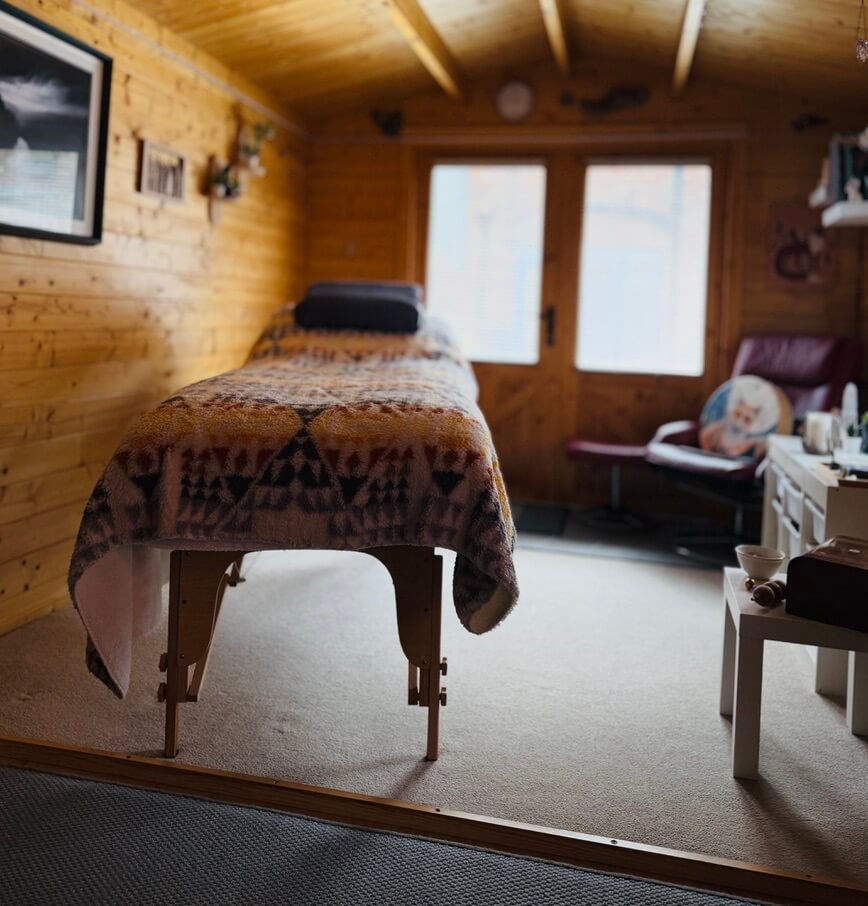
When you arrive, we’ll sit down together on the sofa and have a chat. My treatment room isn’t a clinical space - I’d probably describe it more as “shamanic chic” - and it’s somewhere designed for you to feel comfortable.
We’ll talk a little about what’s going on for you and what has brought you to Reiki. You don’t need to arrive knowing precisely why you’re there or being able to put everything you’re feeling neatly into words.
You might simply know, “I’m completely exhausted.” You might be deep in grief. Or you might just have that sense that something isn’t right and you need to stop for a while.
Each of these is quite sufficient reason.
From there, you’ll lie down on the treatment couch fully clothed, so you'll need to wear something you’re comfortable in.
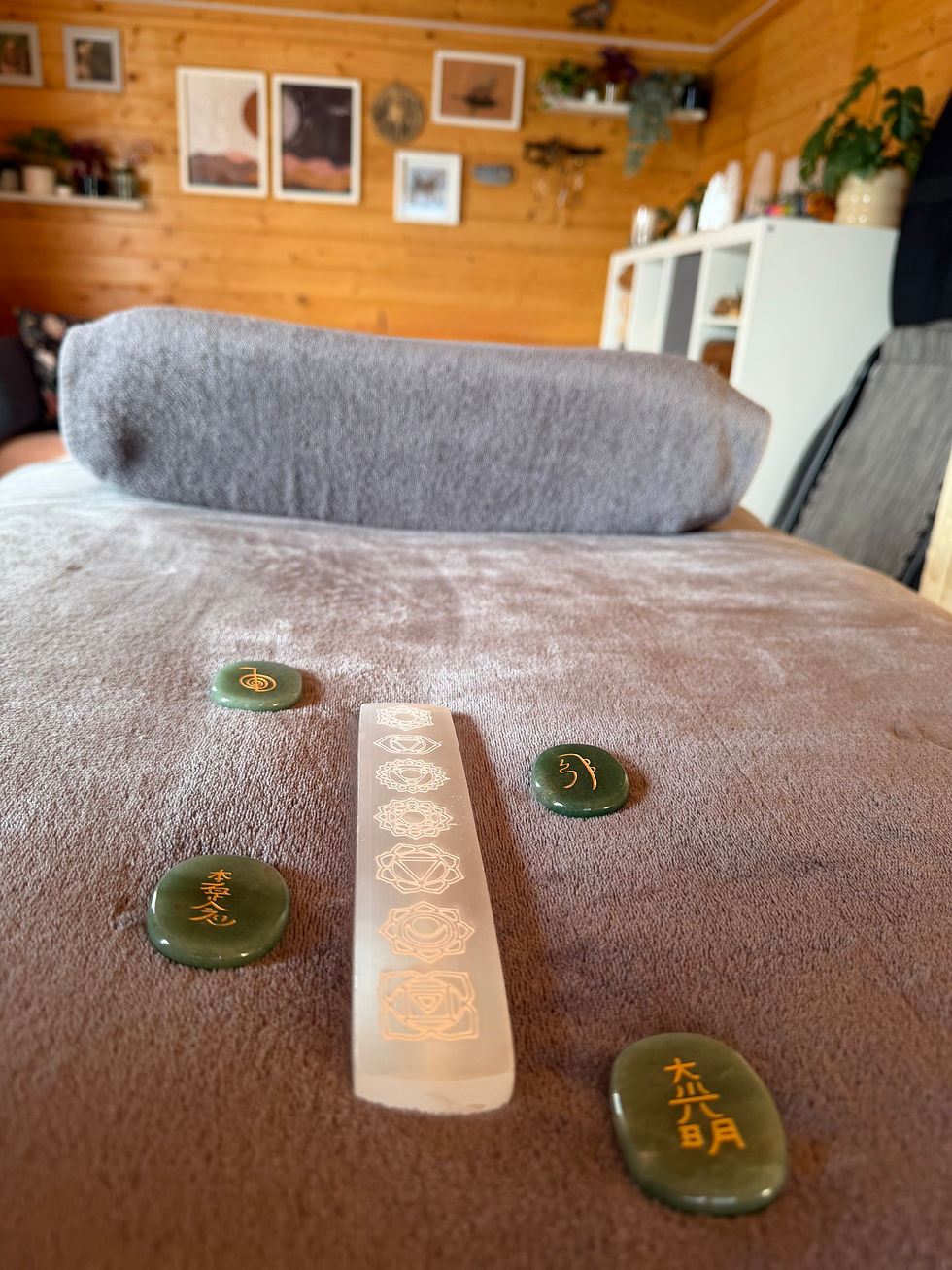
Depending on you and the session, I may incorporate other things into the treatment, such as sound using Himalayan singing bowls or tuning forks, or crystals.
Reiki itself is generally given with my hands gently resting on the body, or, if you would prefer not to be touched, held just above it. I work through a series of positions, beginning at the crown and moving around the head, throat, heart, solar plexus — the area just above your belly button — abdomen, legs and feet.
Your job during all of this is simply to stop, relax into the moment and allow yourself to receive.
You don’t have to concentrate, meditate, visualise or try to make anything happen. You don’t need to be looking backwards at what’s already happened or forwards to what you need to do next. For that time, you can simply be where you are.
For people who spend much of their lives doing, thinking, organising and looking after everybody else, that can be surprisingly unfamiliar territory.
What might I feel during Reiki?
Everybody experiences Reiki differently, and even your own experience can be different from one session to the next.
What you can expect is the opportunity for some very deep relaxation. You may find yourself drifting into that lovely space somewhere between sleep and awake - almost a dream state. Occasionally, people fall asleep completely.
You might notice heat or coolness where my hands are positioned, tingling or other physical sensations. Some people see colours or images in their mind’s eye. You might also experience an emotional release. That can look like a cough, a giggle, a gurgling tummy or, occasionally, tears.
All of these are perfectly welcome.
When the treatment finishes, you’ll have time to gently bring your awareness back, sit up when you’re ready and have some water. Then we can talk about your experience - what you noticed, anything I noticed and anything that may have come up for you.
Where it’s appropriate, I also like you to leave with something practical that you can take away and use in everyday life.
Why do people have Reiki?
You don’t have to wait until something is wrong - or until everything has fallen apart - before giving yourself permission to stop.
Some people come for Reiki simply because they enjoy it. It gives them dedicated time for themselves, when nobody else needs anything from them, and an opportunity to deeply rest and reset.
But relaxation is only one part of Reiki.
Because Reiki is a holistic practice, people come for physical, mental, emotional and spiritual reasons - and very often, those things overlap.
Physically, people may seek Reiki while living with chronic pain, long-term health conditions or ongoing physical symptoms, or while going through conventional medical treatment. Reiki can be used very effectively as a complementary wellbeing practice alongside appropriate medical care. It supports rest, relaxation and the body’s natural healing processes.
Mentally, people may come because their thoughts feel particularly busy, they’re finding it difficult to switch off or they need some space away from constantly thinking, analysing and making decisions. Reiki can offer an opportunity for the mind to quieten and for a little more clarity to emerge.
Emotionally, people often seek Reiki during periods of anxiety, grief, low mood, significant change or emotional upheaval. Sometimes there are emotions that need processing; sometimes you can’t quite identify what you’re feeling at all. Reiki creates a space in which you don’t necessarily have to find the words first.
And then there’s the spiritual side.
For some people, Reiki is primarily about healing, relaxation and wellbeing. For others, it becomes part of a much deeper spiritual practice and offers a way of feeling more connected to themselves, their intuition, the Universe and their own sense of purpose.
Of course, none of these things exists in a neat little box.
Grief can leave you physically exhausted. Chronic pain can affect your mood. Anxiety can interfere with your sleep. A major life transition can leave you questioning who you are and where you’re going next. I wrote more about these transitional points in When You Stop and Ask, “Who Am I Now?”
Reiki doesn’t ask you to decide whether what you’re experiencing is physical, mental, emotional or spiritual before you walk through the door. It considers the person as a whole.
Neither does one approach to Reiki make it more or less “Reiki” than another. You can come looking for physical or emotional support without wanting to explore spirituality at all. Equally, you can come wanting to focus on and explore the energetic and spiritual aspects of the practice.
Reiki, much like my own approach to working with people, meets you where you are.
Which Reiki session is right for me?
For a straightforward Reiki treatment, I offer two different session lengths because I’ve come to realise that different people need different things from the time surrounding the Reiki itself.
My 45 minute session is a more focused Reiki treatment and is offered at a lower price point. It’s a great way to experience Reiki for the first time if you’re curious about it, or if you’re looking for an opportunity to stop, receive Reiki and see how the treatment feels for you.
It’s also ideal if you want to incorporate Reiki as a maintenance appointment into your regular wellbeing routine, or if you simply prefer to come in, have your treatment and get on with your day.
The longer Reiki session gives us more space.
There’s more time beforehand to talk in greater depth about what’s happening for you and what you would like support with, without that conversation taking away from the Reiki itself. Afterwards, we also have more time to explore your experience and anything that may have arisen during the treatment.
If you’re going through a period of transition, feeling particularly stuck, finding life overwhelming, or you simply know that you need more than a quick check-in either side of the treatment, that extra space can be incredibly valuable.
Neither is a lesser version of Reiki. They’re simply two ways of experiencing it, depending on what you need at the time.
Learning Reiki for yourself
Reiki isn’t only something you can receive from somebody else. You can also learn to work with it yourself.
I teach all three levels of Reiki.
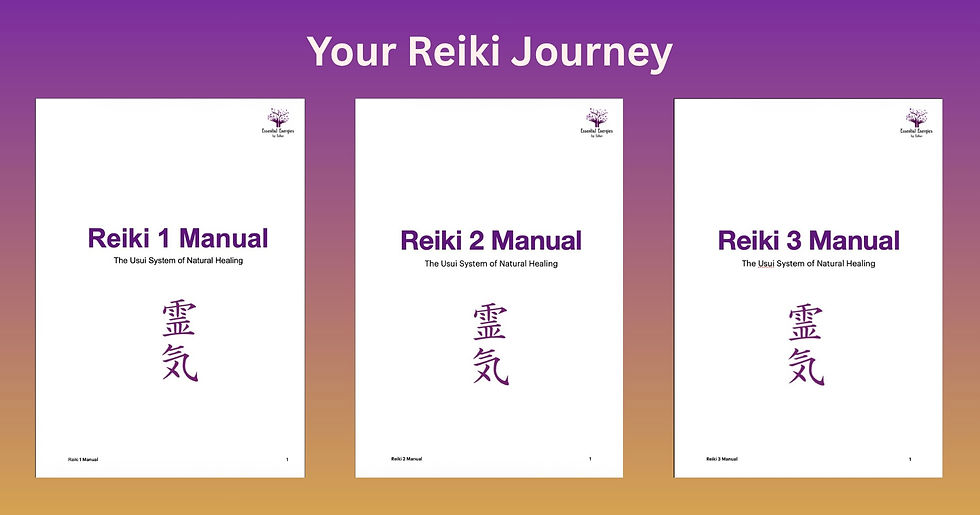
Reiki One begins very much with you. It’s an opportunity to develop your own relationship with Reiki and use it as a self-healing and wellbeing practice. You can also offer Reiki to family and friends, animals, plants and the natural world around you.
Reiki Two takes the practice further and enables you to practise Reiki professionally with others.
Reiki Three is the Master Teacher level, for those who feel called to significantly deepen their practice and potentially teach and attune others themselves.
You don’t have to have completed your earlier Reiki training with me to continue your journey with me either. If you’ve previously completed Reiki One or Reiki Two elsewhere, we can talk about where you are in your practice and what the appropriate next step might be.
Learning Reiki is a much bigger subject in its own right - and probably one for another blog - but it’s worth knowing that Reiki can become something you carry into your everyday life, rather than something you only experience when somebody else gives you a treatment.
Is Reiki “woo”, or is it wellbeing?
It can be either. It can be both.
Something I often say to my clients is that it doesn’t always have to be either/or. Sometimes it can be both/and.
You can come for Reiki because you want some time in which your nervous system gets a chance to settle and your brain gets a rest.
You can come because energy work and spirituality are already important parts of your life and you want to explore everything that arises during the session.
Or you can be somewhere in between.
You don’t need to believe something you don’t believe in order to come for Reiki. And equally, I’m certainly not going to strip the spirituality out of Reiki for those who want to explore it with me.
That’s really the space I try to hold throughout my work: making the esoteric feel accessible and allowing the everyday to feel a little more spiritual, without expecting you to fit neatly into one or the other.
Frequently asked questions about Reiki
What does Reiki actually do?
Reiki is an energy healing practice that works holistically across the physical, mental, emotional and spiritual aspects of a person. A Reiki practitioner acts as a channel for universal life force energy, with the intention of supporting balance and the body’s natural healing processes.
How do I prepare for a Reiki session?
You don’t need to do anything special before Reiki. Wear comfortable clothing, arrive as you are, and give yourself permission to stop for a while.
What should I wear to a Reiki session?
Reiki is given fully clothed, so simply wear something comfortable that you can relax in. You won’t need to change or remove any clothing for your treatment.
What happens after a Reiki session?
Everyone responds differently. You may feel deeply relaxed, lighter, clearer or simply ready for a good night’s sleep, so it’s helpful to give yourself a little space afterwards rather than expecting a particular response.
Can you do Reiki on yourself?
Yes. Self-Reiki is an important part of learning Reiki, particularly at Reiki One, where you begin developing your own relationship with the practice before progressing further.
How much does a Reiki session cost?
Reiki prices vary depending on the practitioner, location and length of the treatment. At Essential Energies, Poole, a 45 minute Focused Reiki session costs £45, while a 60 minute Reiki Healing session costs £60. You can choose whichever option best suits what you need from your session.
So, if you’ve been curious about Reiki but weren’t quite sure what you were signing yourself up for, hopefully there’s a little less mystery now.
And if you’d rather experience Reiki than simply read about it, you can book a session and come exactly as you are.


Comments